Strength and Protein After 50: Why It Matters More Than You Think
Protein after 50 is not just about muscles or gym culture. It can be part of a more supported routine for energy, recovery, confidence and healthy aging. Here is a practical guide to strength, protein and getting started without pressure.
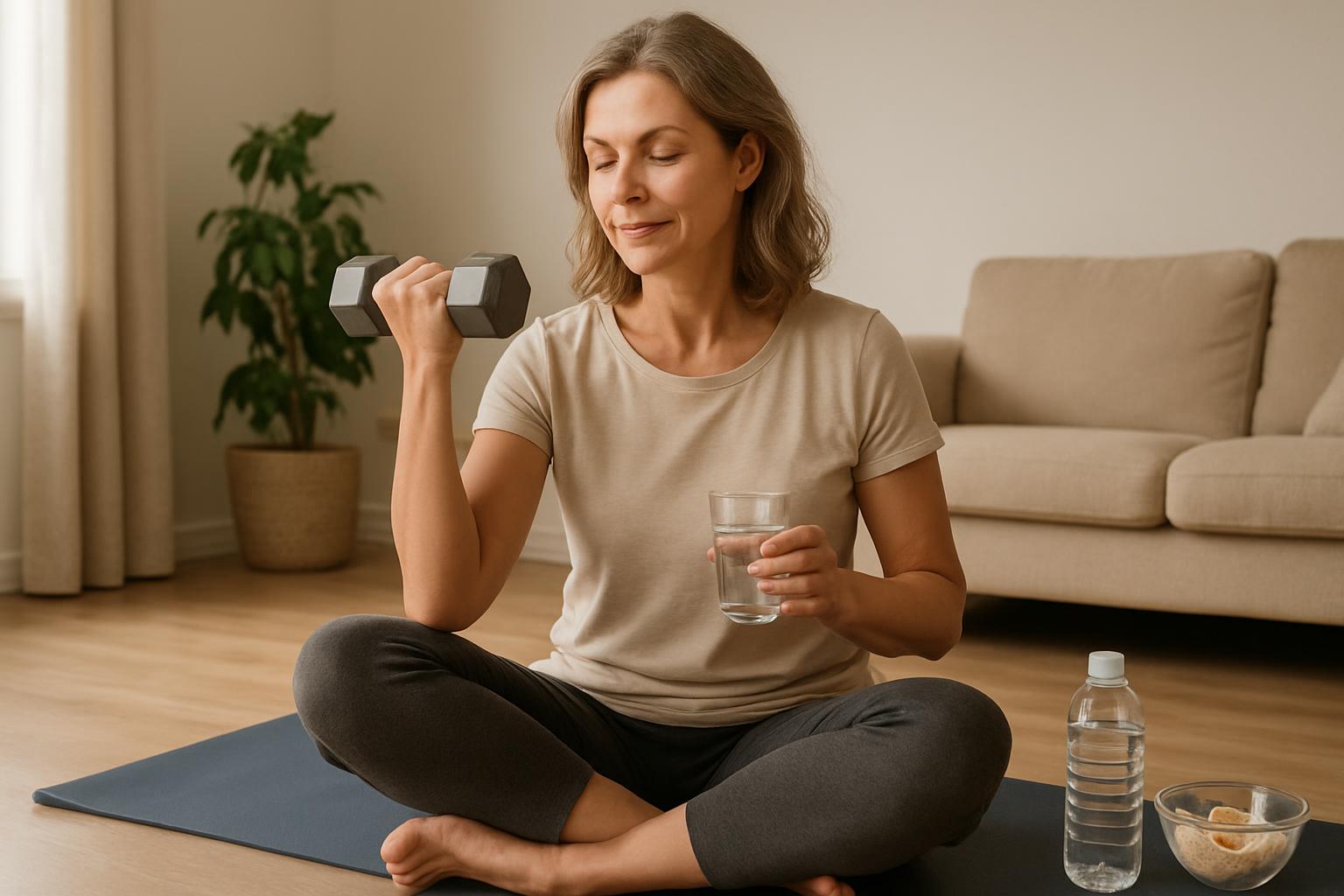
If you have noticed that strength feels harder to maintain after 50, you are not imagining it. This often shows up in ordinary moments before it shows up in a workout. You wake up a little stiffer than you used to. You carry the shopping bags and feel it in your shoulders. You rush through the morning with coffee first, something small later, and by afternoon your energy feels flat. You might look in the mirror and feel like your body has changed in ways you did not agree to. Or maybe you are trying to do the right things, but old habits that once seemed to work now leave you feeling under-fuelled, inconsistent, or back at Monday again.
For many people, strength and protein become more important after 50 not because they suddenly need a perfect plan, but because the body often benefits more from support, consistency and recovery than from pressure. I often see this with people after 40 and 50: they assume they need a harder routine, when what they really need is a steadier one. Protein is part of that conversation, and strength is too. Not in an extreme way. In a daily life way.
This article is your hub for understanding why protein after 50 matters, how strength fits into healthy aging, what changes with age, what people often get wrong, and how to build a realistic routine that supports real life.
Why protein and strength matter more after 50
After 50, many people notice they do not bounce back the way they used to. A poor night of sleep affects the next day more. A stressful week can throw off meals, movement and motivation. A few days off routine can feel like a bigger setback than before. This is one reason protein and strength matter more now: they may support the body when resilience feels less automatic.
Strength is not only about appearance or gym performance. It is about everyday capacity. It helps with carrying, lifting, standing up from the floor, walking uphill, feeling steadier, and staying engaged in life with more confidence. Protein matters because it is part of how many people support recovery, appetite steadiness and muscle maintenance within a balanced routine.
That does not mean more is always better. It means protein becomes more worth paying attention to, especially if your current pattern looks like coffee, toast, a rushed lunch, an afternoon crash, and a larger evening meal that still leaves you feeling undernourished.
When I support someone with this, I usually look first at the basics: are they eating enough across the day, are they getting some protein regularly, and are they doing any form of strength-building movement they can repeat next week, not just today?
What often changes after 50
Many people reach this stage of life and think, “Why does this suddenly feel harder?” The answer is usually not laziness or lack of discipline. It is often a mix of changing routines, stress, sleep, recovery, appetite, movement habits and body composition.
Some people become less active without fully noticing. Desk time increases. Walking decreases. Recovery takes longer, so they stop doing the movement they used to enjoy. Others eat less earlier in the day, then feel overly hungry at night. Some rely on convenience foods while juggling work, travel, family or caregiving. Others are trying to “be healthy” but accidentally undereat, especially protein.
For women, this stage can overlap with changes that affect energy, body confidence and appetite rhythm. If that sounds familiar, this guide on why your body feels different after 50 for women can help put those changes in context. For men, a different version of the same frustration often shows up as slower recovery, lower drive or feeling less powerful than before. Why men feel slower after 50 is useful if that is the lived experience.
In real life, this often looks like someone who still thinks of themselves as reasonably healthy, but their actual daily routine no longer supports how they want to feel. That gap matters more after 50.
Protein after 50 is not just a gym topic
Protein can sound like a fitness-only conversation, but for most people it is much more practical than that. It is about building meals that help you feel more supported, especially if you want steadier energy, fewer random snack spirals, and better recovery from normal life.
Many adults grew up with meals built mostly around bread, cereal, pasta or something quick. That does not make those foods bad. It just means protein may be too low or too inconsistent across the day to support how they want to feel now. If breakfast is light, lunch is delayed, and dinner carries the full load, the body may feel like it is always trying to catch up.
I like to bring people back to one simple question: where is your protein actually showing up between waking up and dinner? That question tends to reveal more than any complicated nutrition rule.
This does not need to become obsessive. It may be as simple as adding a more substantial breakfast, choosing a lunch with a real protein source, or planning a recovery-friendly snack instead of running on caffeine until late afternoon. If breakfast is where you struggle most, Protein at Breakfast After 40 is a helpful place to start, and How to Build a Protein Breakfast After 40 gives practical routine ideas.
Why strength training matters even if you do not see yourself as “sporty”
Strength training can feel intimidating because many people picture heavy weights, crowded gyms or a highly motivated version of themselves that does not exist on a Tuesday after poor sleep. But strength after 50 does not have to look like that.
It can mean bodyweight exercises at home, resistance bands, light dumbbells, sit-to-stands from a chair, wall push movements, step-ups on the stairs, or a short guided routine in the living room. What matters most is that your muscles are being asked to do something useful often enough to stay engaged.
That kind of consistent strength work may support confidence, posture, day-to-day capacity and the feeling that your body is still available to you. It can also make other parts of life easier, from getting up off the floor with grandchildren to lifting luggage without dreading it.
If the thought of strength training brings up pressure, Strength Without Pressure After 50 is worth reading next. It helps reframe strength as support, not punishment.
Real life example: Anna, 58, did not want a gym membership. She wanted to stop feeling weak every time she carried laundry upstairs. Her starting routine was two ten-minute strength sessions a week in the corner of her living room, plus a better lunch on workdays. That did not transform her overnight, but within a few weeks she noticed that simple tasks felt less draining and she was less likely to skip movement altogether because the plan felt doable.
Common mistakes people make with protein and strength after 50
Most people do not need more information. They need fewer avoidable mistakes.
One of the biggest mistakes is doing too much at once. Someone decides they need more protein, more exercise, fewer carbs, no sugar, a strict morning routine and five workouts a week. By Thursday they are exhausted, by Saturday they are off track, and by Monday they are starting over again.
Another common trap is relying only on coffee and willpower for the first half of the day. If energy is already low and meals are light, it becomes much harder to show up for strength work later or make supportive choices when tired.
Random product buying is another issue. People know they should “have protein” so they buy bars, powders or supplements without fixing the basic routine underneath. Sometimes those products can be convenient, but they work best when they sit inside a broader pattern of real meals, movement and recovery. If you are tired of guessing with nutrition support, Personalized Nutrition After 40 explains why random choices often stop feeling helpful.
There is also the comparison trap. You see what someone else your age is doing online and think you should be doing the same. But the best routine is the one your body, schedule and motivation can actually sustain. I often see this with people after 50: they are not failing because their plan is too small. They are failing because their plan is borrowed.
What to avoid if you want a routine that lasts
If you want strength and protein support to last, avoid building everything around urgency. Urgency can get you started, but it usually does not keep you steady.
What to avoid:
- Skipping meals, then expecting good energy for movement later
- Chasing perfection instead of consistency
- Buying random products before fixing breakfast, lunch and sleep
- Overtraining after a long gap, then needing a week to recover
- Relying only on coffee to carry your mornings
- Comparing your body now to your body at 35
- Restarting every Monday instead of adjusting what was unrealistic
When I support someone with this, I usually look for the smallest point of friction. Is breakfast too light? Is lunch too chaotic? Is exercise too ambitious? Is the evening too depleted? Solving one friction point often helps the rest.
How to build a realistic protein routine after 50
A realistic protein routine is not a mathematical challenge. It is a repeatable eating pattern. The easiest way to build one is to think in moments, not totals.
Start by looking at your day in three or four eating moments and ask where protein naturally fits. Breakfast may include eggs, yogurt, cottage cheese, a protein-rich smoothie, or another option you enjoy. Lunch may need more structure than a sandwich grabbed in a rush. Dinner is usually the easiest place, but it should not have to carry the whole day.
If mornings are difficult, pairing protein with a habit you already keep can help. For example, instead of drinking coffee on an empty stomach and hoping for the best, you could eat something small first and build from there. What to Eat Before Your First Coffee is useful if that is one of your sticking points.
You also do not need a “perfect” meal every time. A better routine often comes from having a few reliable defaults. That might be one breakfast you can make half asleep, two lunches you can repeat on busy days, and one evening backup meal for the nights when energy is low. I like to bring people back to simple repeatables because decision fatigue is real, especially when work, family and stress are all in the mix.
Real life example: David, 61, thought he needed a supplement plan. What he actually needed was breakfast before his second coffee and a more substantial lunch than crackers at his desk. Once those changed, his afternoon energy improved enough that he could restart short strength sessions without feeling wiped out by them.
How to start strength work without overwhelming yourself
The best starting point is often less than you think. Two or three short sessions a week can be enough to begin rebuilding consistency. That may be ten to twenty minutes at home. It may be a simple circuit of chair squats, wall presses, band rows and gentle core work. It may be a class if you enjoy being guided.
The key is not to make the session so difficult that it disrupts the rest of your week. You want enough challenge to feel engaged, but not so much that soreness, dread or scheduling chaos pushes you back to zero.
If walking is already part of your routine, it can work well alongside strength. A 10-Minute Walk Routine for Better Energy is a good support article if you want an easy movement base around your strength habits.
Think of strength as practice, not a test. You are not trying to prove what you can do in one day. You are building the kind of support that your future self will thank you for.
Whole-routine thinking: strength, protein, sleep, recovery and energy all connect
One reason people get stuck is that they isolate one piece of the puzzle. They focus only on protein, or only on exercise, while sleep is poor, hydration is low, and the day is running on stress and convenience food. The body does not experience your routine in separate categories. It experiences the whole pattern.
If you want strength to improve, recovery matters. If you want to eat better, planning matters. If you want better energy for training, mornings and afternoons matter. This is why whole-routine thinking is so important after 50.
For example, if you keep crashing in the afternoon, strength sessions often get skipped not because you are lazy, but because your energy has already been spent. What to Do When You Crash at 3 PM can help you spot that pattern. If evenings feel chaotic and recovery is poor, A Simple Evening Routine for Tomorrow’s Energy may be the next article that matters more than another workout tip.
I often see people make faster progress when they stop asking, “What is the one thing I should do?” and start asking, “What is the routine pattern that makes the good choice easier?” That shift changes everything.
When support helps more than guessing
There is a point where reading more tips stops being useful and starts becoming tiring. Not because you have failed, but because guessing alone can become exhausting. Especially after 50, many people do better with a clearer path, a simpler plan and some support around what fits their life.
That support might mean understanding your best starting point, getting guidance on routine building, or exploring more personalized wellness tools where available. If you are not sure where to start, the Better2Be Wellness Assessment helps you choose the path that fits your current reality rather than the one you think you should be on.
If you want a more human next step, Wellness Support can help you explore what kind of support makes sense depending on your country and goals. For some people that may include product guidance or a more guided path where available. For others, it may simply mean choosing a more focused routine instead of staying scattered.
Your next small step
Ready to find your Better2Be starting point?
Choose the Better2Be path that fits what you need most right now and start with three simple tasks today.
The Better2Be path for strength and protein after 50
At Better2Be, the goal is not to push a hard reset or turn you into someone else. The goal is to help you move from frustration to a realistic next step. For some readers, strength and protein are mainly part of the Healthy Aging Path, because what they want is steadier support, more confidence and better everyday function. For others, this topic connects closely with energy, especially if poor eating patterns and inconsistent movement are leaving them flat. In that case, the Energy Reset Path may also be relevant.
If your broader concern is that nothing seems to work like it used to, Nothing Works Like It Used To After 50 is another helpful hub article. It can make this stage feel less personal and more understandable.
The important thing is not to treat strength and protein as isolated fixes. They work best as part of a calmer routine that includes enough nourishment, manageable movement, some recovery, and less self-criticism.
Your next step, without pressure
If strength feels harder than it used to, that does not mean your best years of feeling capable are behind you. It may simply mean your body needs a different kind of support now: more consistency, more recovery, and more intentional nourishment than it needed before.
Start with one small action this week. Choose either a more protein-supported breakfast or two short strength sessions you can realistically keep. Not both if that feels like too much. Just one. Let that be enough for now.
If you want help choosing the right Better2Be path, take the Wellness Assessment. If you already know you want more guided support, visit Wellness Support to explore your next realistic step.
Your next small step
Ready to find your Better2Be starting point?
Choose the Better2Be path that fits what you need most right now and start with three simple tasks today.
Your next small step
Not sure where to start?
Find your Better2Be Path and take the first small step toward better energy, habits, and confidence.

Skin & Glow After 40: Why Routine Matters More Than Perfection
If you want better skin glow after 40, the answer is rarely perfection. A calmer daily routine, steady habits and the right kind of...
Read article
Energy After 40: Why Your Old Routine May Not Work Anymore
If your energy after 40 feels less predictable than it used to, you are not imagining it. Here is why old habits may stop...
Read article
Personalized Nutrition After 40: Why Guessing Often Stops Working
Personalized Nutrition After 40, many people notice that the simple answers they used before no longer feel so simple. Energy changes. Recovery changes. Sleep,...
Read article