Healthy Aging After 50: How to Add More Life to Your Years

Healthy aging after 50 is not about trying to become younger. It is about learning how to support the body, energy and life you have now.
For many people, life after 50 brings a strange mix of clarity and confusion.
You may know yourself better than ever. You may care less about things that once felt important. You may feel more honest about what matters.
And at the same time, your body may feel less predictable.
Energy changes. Sleep changes. Recovery changes. Strength changes. Skin changes. Weight may respond differently. Motivation may come and go. The same habits that once helped you feel balanced may no longer be enough.
That can feel frustrating, especially when you are still the same person inside.
But healthy aging is not about fighting your age. It is about building a calmer, smarter kind of support.
You are not too late. Your body is still adaptable. The path just needs to fit your life now.
What healthy aging really means
Healthy aging is often presented as a perfect lifestyle: perfect meals, perfect exercise, perfect sleep, perfect routines.
But real life after 50 is rarely perfect.
There may be family responsibilities, work stress, old injuries, changing hormones, aging parents, financial pressure, less time for yourself or years of habits that were built around taking care of everyone else first.
So healthy aging cannot depend on perfection.
It has to depend on support that is simple enough to return to.
At Better2Be, healthy aging is built around four simple anchors:
Move
Gentle, consistent movement that supports strength, mobility and confidence.
Nourish
Food and hydration choices that help your body feel supported, not punished.
Reset
Recovery, sleep, breathing room and calmer daily rhythm.
Connect
Support, encouragement and the reminder that you do not have to do this alone.
Why the old approach often stops working
Many people after 50 try to solve new challenges with old strategies.
They eat less, push harder, start strict plans, promise to be more disciplined and hope their body will respond the way it used to.
Sometimes that works for a few days.
Then real life happens.
Energy drops. Sleep gets interrupted. Stress rises. The plan becomes too hard to maintain. Motivation disappears. And the person feels like they failed again.
But often the problem is not failure. It is mismatch.
A body after 50 often needs more rhythm, more nourishment, more recovery and more consistency — not more punishment.
Energy is often the first signal
One of the first things people notice is that energy feels different.
You may wake up tired. You may start the day well but crash later. You may need more time to recover after busy days. You may feel less naturally motivated than before.
This does not mean you are lazy.
Energy is influenced by many simple but powerful things: sleep, stress, hydration, protein, movement, recovery, routine and emotional load.
That is why one of the most useful healthy aging questions is not, “How do I force myself to do more?”
It is:
What would help my energy feel more steady today?
Sometimes the answer is simple: water before coffee, a better first meal, a short walk, a calmer evening, or going to bed without one more hour of scrolling.
Strength matters more than most people realize
Healthy aging is not only about weight, appearance or avoiding decline.
It is also about staying capable.
Strength supports everyday life: walking, carrying, climbing stairs, standing tall, staying balanced and feeling more secure in your own body.
For many people, strength also changes confidence.
When you feel capable, you move differently. You carry yourself differently. You trust your body more.
This does not mean you need extreme workouts.
It means your body benefits from regular signals that strength is still needed. That can begin with walking, gentle resistance, bodyweight movement, stairs, light weights or guided exercise that fits your current level.
Start with the Healthy Aging Path
If your main goal is to feel stronger, steadier and more supported in this season of life, the Healthy Aging Path is a simple place to begin.
Nourishment becomes support, not restriction
Many people have spent years thinking about food through rules.
What to avoid. What to cut. What to control. What to remove.
But after 50, nourishment often becomes a better focus than restriction.
Your body needs enough protein, hydration, fiber, color, minerals and steady meals to support energy, muscle, skin, digestion and recovery.
This does not mean eating perfectly.
It means asking a better question:
What can I add today that helps my body feel supported?
That question is often more helpful than starting another strict plan.
Recovery is not laziness
One of the biggest mindset shifts in healthy aging is learning to respect recovery.
Rest is not the opposite of progress. Recovery is part of progress.
Sleep, slower mornings, breathing room, gentle walks, quiet evenings and less constant pressure can all support the body in ways that are easy to underestimate.
This is especially important if you have spent years pushing through everything.
Your body may not need you to give up. It may need you to stop treating exhaustion as normal.
Confidence can be rebuilt through small wins
Healthy aging is not only physical.
It is emotional too.
When your body changes, your confidence can change with it. You may avoid photos, clothes, mirrors, social situations or movement because you do not feel like yourself.
But confidence does not always return through dramatic transformation.
Sometimes it returns through small promises kept.
A walk completed. A nourishing breakfast. A calmer evening. A strength session. A glass of water before coffee. A supportive conversation. A moment of kindness instead of criticism.
These things may look small, but they rebuild trust.
The Better2Be approach to healthy aging
Better2Be does not start with pressure.
It starts with your real life.
Instead of asking you to change everything, it helps you choose a path and begin with simple steps that make sense today.
For healthy aging, that may mean:
- moving gently but consistently,
- supporting energy with better nourishment,
- protecting recovery,
- building strength gradually,
- creating a routine that feels possible to repeat,
- finding support instead of doing everything alone.
Three simple healthy aging tasks for today
If you want to begin today, keep it simple. Do not try to redesign your whole life.
Choose one of these:
- Take a 10-minute walk or do gentle movement.
- Add one nourishing meal or snack that supports energy and strength.
- Create one small recovery moment: breathe, rest, stretch, pause or go to bed a little earlier.
That is enough for a first step.
Healthy aging grows through repetition, not pressure.
Choose your Better2Be starting point
Healthy aging may be your path, or you may need support with energy, body confidence, skin and glow, or another starting point. Choose the path that fits what you need most today.
I want more steady energy
For days when you feel tired, foggy, unmotivated or ready for a calmer daily rhythm.
Start this path → Body ConfidenceMy body feels different
For changes in weight, shape, habits or confidence when old methods no longer feel right.
Start this path → Skin & GlowI want to support my glow
For skin, glow, hair, nails and healthy aging support from the inside and outside.
Start this path → Healthy AgingI want to age with strength
For strength, habits, recovery and a more confident next chapter after 40 or 50.
Start this path →A better next chapter
Healthy aging is not about pretending nothing changes.
Things do change.
But change does not mean your best days are behind you.
It may simply mean your body is asking for a different kind of partnership.
Less punishment. More support.
Less guessing. More rhythm.
Less starting over. More small steps you can return to.
You do not need to become younger to feel better.
You can become more supported, more steady and more connected to the life you still want to live.
Your next step does not have to be big. It only has to be real enough to begin.
You may also find these helpful
Your next small step
Ready to find your Better2Be starting point?
Choose the Better2Be path that fits what you need most right now and start with three simple tasks today.
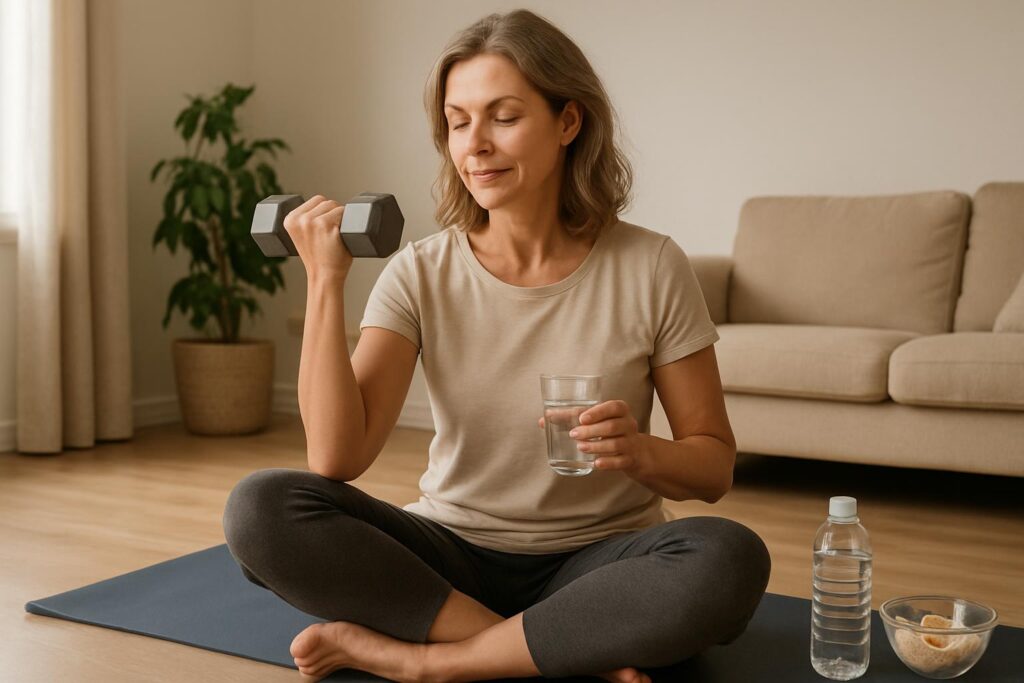
Strength and Protein After 50: Why It Matters More Than You Think
Protein after 50 is not just about muscles or gym culture. It can be part of a more supported routine for energy, recovery, confidence...
Read article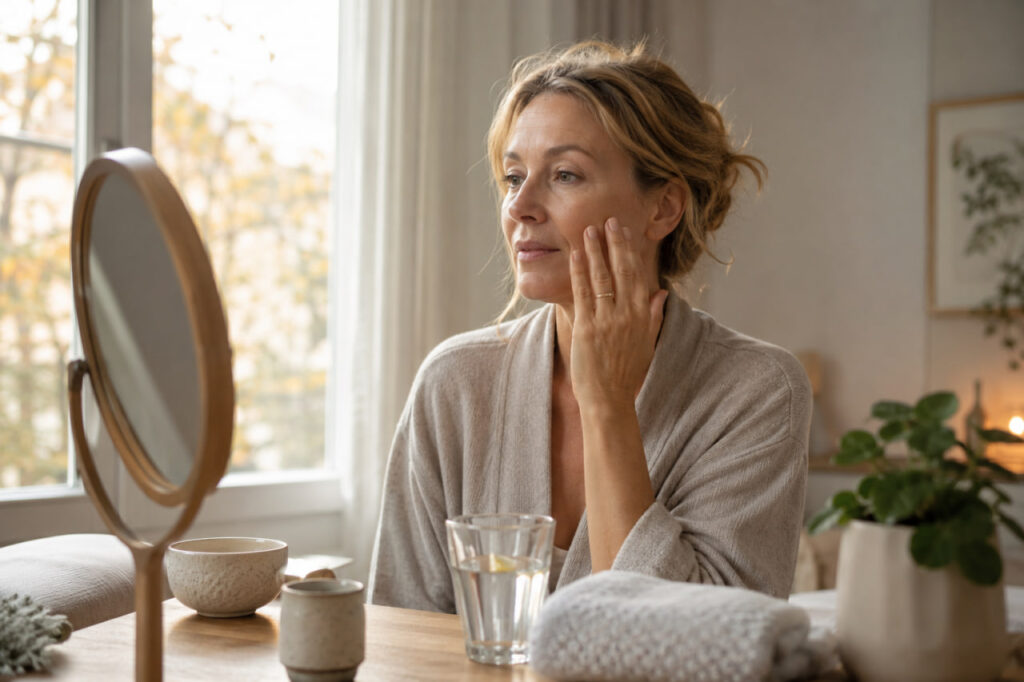
Skin & Glow After 40: Why Routine Matters More Than Perfection
If you want better skin glow after 40, the answer is rarely perfection. A calmer daily routine, steady habits and the right kind of...
Read article
Energy After 40: Why Your Old Routine May Not Work Anymore
If your energy after 40 feels less predictable than it used to, you are not imagining it. Here is why old habits may stop...
Read article